Hot off the press:
http://www.reverbnation.com/open_graph/song/12889142
This is one of our more up-beat and less suicidal numbers 😉
Enjoy! You can also play it with the player widget on the right hand side on this website.
Hot off the press:
http://www.reverbnation.com/open_graph/song/12889142
This is one of our more up-beat and less suicidal numbers 😉
Enjoy! You can also play it with the player widget on the right hand side on this website.
This cracked me up when it aired many years ago. I’m glad somebody found it and posted it!
I ran across these two videos by Peter Sellers, doing Beatles songs in a “different” way than they do!
Here’s one where he does “A Hard Day’s Night” Shakespearian style:
And this one is “She Loves You” as Dr Strangelove would have done it:
Here’s a fun thing you can play with – Google insights for Search
You can put in a search term, and optionally some filters, and then the system will show you how much (over time, since 2004) that particular thing was searched for.
For example, I put in “Field Camera”. Here is the result I got:
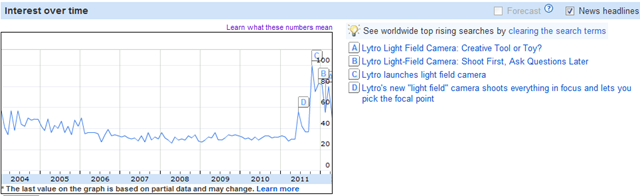
This shows some query activity over the years, but that interest has peaked starting in 2011
Put in your own favorite thing and see how often people are searching for it. In fact, put your own name in!
Last night was quite productive! We put the finishing touches on “The Imposter” and “Tome Corazon”. You can listen on the music players to the right, or visit our website “The Strange Game”
Ok, so here’s a pretty inane concept for you, and there are companies who do this. To me, this is beyond nutty. I can see outsourcing the grunt processes in your company. I can also see outsourcing various functions such as timecards, service desk, printer maintenance, network maintenance, etc. However, when it comes to Leadership… the leadership of a company IS the company. Outsourcing that is like a ship’s captain turning the rudder over to somebody else then going down to the saloon for drinks, hoping that all will go well.
We finished the last polishing touches on Gitane, a lovely song about a special needs girl. You can give it a listen with the player in the right hand column.
Enjoy!
Tim & Ellis (The Strange Game)
Just released last night: “Fallen Leaves”, the latest song from “The Strange Game”!
You can listen to it on either of the two music players on the right hand side of this blog, right under “Recent Comments”. Let us know what you think!
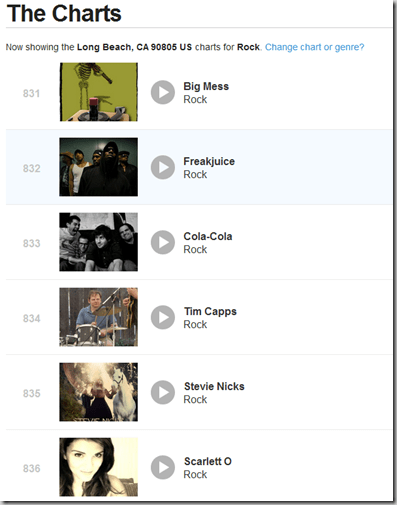
Wow – on the ReverbNation local Rock chart, I just crept ahead of Stevie Nicks 🙂
Tom Anthony (@TomAnthonySEO) created this interesting demonstration of how a website you visit can easily detect which social networks you are actively logged into. This isn’t a horrible security issue, but it is something that you should be aware of if you care about having some third party “see” which social networks you are using.
In a nutshell, what the technology does is to request that an image be loaded from Facebook, or Google, or whatever. If the load is successful, then you are logged in to that site. If the load fails, then you weren’t logged in and the server has redirected you to the login page instead of serving up the image.
This isn’t really a “fixable” exploit. The obvious way to fix this would be for the servers of all the social network “targets” to always serve up image requests regardless whether you are logged in or not. Clearly, that won’t work as then it would be easy to hack their image stores from an anonymous account. As far as I can see, the only way to “fix” this would be for servers to only redirect to a login page for non-image requests, and just serve up a broken image icon of some type to mask the image when the user isn’t logged in. Of course, the image being served up would have to masquerade as the image requested so the browser would find it difficult to detect. Also, making such changes to servers requires that somebody on that end actually cares about this privacy issue.
I did come up with an interesting “white hat” use for this technology though… If you put it on your company intranet page, assuming employees need to be on there a lot while working, you can detect and log employees that are logged into social networking. If you have (or think you have) content blocks in place for social websites, this can be a tool to find out who is circumventing your blocks.
 Inane World